Journal
Your Guide to Visiting Whitby
Whitby continues to be the most popular destination for UK holidaymakers. With its romantic ruins of Whitby Abbey, its picturesque harbour, and golden sandy beaches, it’s the perfect place to visit year-round. Read our Whitby guide to learn everything you need to know about this coastal gem.
Skip ahead to:
Whitby
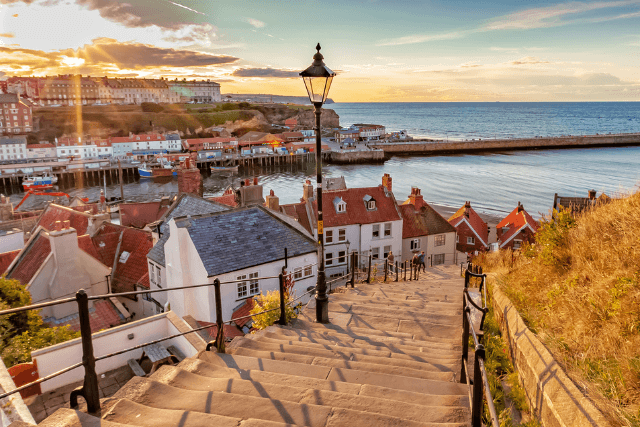
Known as the ‘jewel in the crown’ of the Yorkshire Coast, Whitby is a popular seaside resort in North Yorkshire. It’s home to narrow alleys and quaint streets that meander down to the busy quay. Boasting picturesque harbourside houses and small shops filled with crafts and antiques, it’s got everything you need for a UK staycation.
The town is famous for its festival weekends, including Whitby Goth Weekend, Folk Week, and Regatta Week, as well as its large Open Market, one of our favourite markets in Yorkshire. This coastal hotspot attracts visitors year-round, and the Whitby Tourist Information Centre is available for you to pop in and get help or advice on all the must-see local events.
Where is Whitby?
Whitby is a small seaside town on the North Yorkshire Coast. Located between Scarborough and Redcar, Whitby is surrounded by the North Yorkshire Moors National Park.
What is Whitby Famous For?
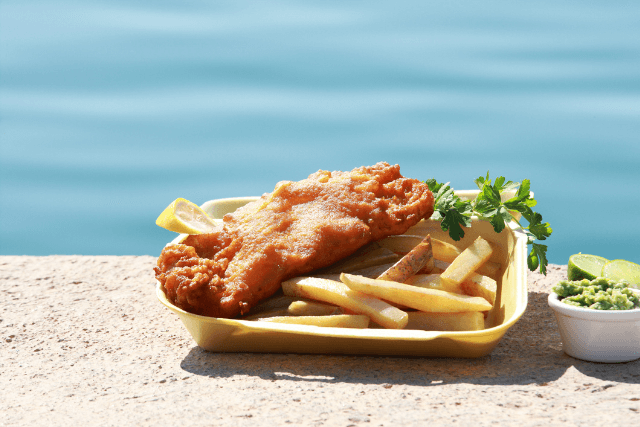
This small, coastal town in Yorkshire has plenty to shout about. Here are four things Whitby is famous for:
Dracula
The town is famous for its association with the Dracula novel by Bram Stoker. After staying in the town, Bram used Whitby Abbey’s Gothic ruins and overall atmosphere as inspiration for this world-renowned tale. Visit the Dracula Experience for a unique tour through the Dracula story and its connections to Whitby.
Captain Cook
Have you heard of Captain Cook, one of the world’s most legendary explorers? His story is closely tied to Whitby.
Although James Cook (1728–1779) was born in Middlesbrough and began his apprenticeship in Staithes, just 11 miles north of Whitby, it was in Whitby that his seafaring career truly began. After discovering his passion for the ocean, he moved to the town to train with a local shipping company. From there, he joined the Royal Navy and quickly rose through the ranks.
This rise led to the Captain Cook we know today, the man who mapped the coast of New Zealand and Australia’s eastern shoreline. He’s now celebrated as one of history’s greatest navigators, surveyors, and explorers.
Whitby Jet
Not many people know of this semi-precious gemstone, but it’s one of Whitby’s hidden gems. Whitby Jet is a rare, fossilised form of the ancient Araucaria tree, often called “monkey puzzle” wood, that has been compressed over millions of years. This process creates a deep black, lightweight material that can be polished to a brilliant shine.
Considered a precursor to coal, jet is warm to the touch and appears in two forms: hard jet, found near saltwater, and soft jet, found near freshwater. Whitby Jet, formed during the Jurassic period around 182 million years ago, is regarded as some of the finest in the world. Its exceptional quality made it especially prized during the Victorian era, when it became the material of choice for mourning jewellery.
Discover more about the local area in our guide to What is Yorkshire Famous For?
The History of Whitby
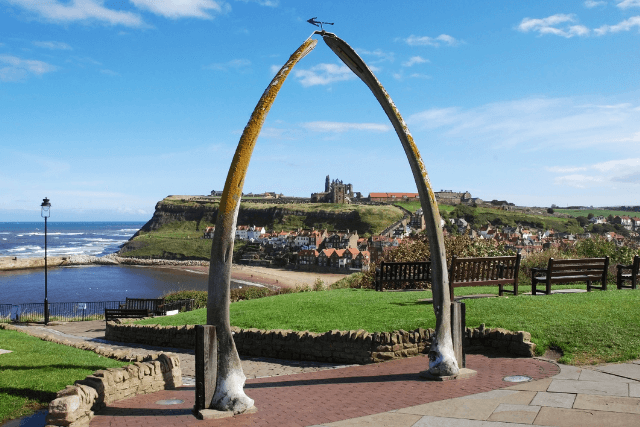
Whitby is steeped in history that dates back to the Saxon period. Here are some of Whitby’s most prominent moments in history that have shaped the city we see today:
- 657 AD – Founding of Whitby Abbey: Established by King Oswy of Northumbria, Whitby Abbey became a major centre of learning and Christianity.
- 664 AD – Synod of Whitby: A landmark church meeting held at the abbey, deciding that England would follow Roman rather than Celtic Christian practices.
- Post-1539 – Dissolution impact: When Henry VIII dissolved the monasteries, Whitby Abbey closed, and the local population shrank dramatically to around 200 residents.
- Elizabethan growth: The discovery of alum (used in the textile and leather industries) sparked significant economic growth, turning Whitby into an important industrial and trading port.
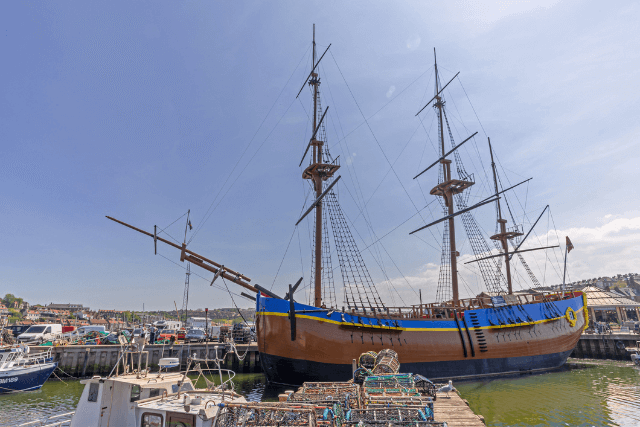
- 18th–19th centuries – Maritime expansion: Following its industrial growth, Whitby became renowned for shipbuilding, producing sturdy, broad-bottomed colliers perfect for long voyages. Many of Captain James Cook’s exploration ships, including HMS Endeavour, Resolution, and Adventure, were built here.
- Captain Cook’s early years: Cook trained in Whitby’s merchant fleet, gaining the skills that would lead to his famous voyages of discovery.
- Mid-1800s – Industry decline: Shipbuilding, whaling, and alum production waned, leaving Whitby in need of new opportunities.
- 1839 – Arrival of the railway: The opening of the Whitby–Pickering line connected the town to the wider Yorkshire region for the first time. It made travel quicker, cheaper, and far more accessible, encouraging a steady flow of Victorian holidaymakers. This new ease of access helped shift Whitby’s focus from industry to tourism, laying the foundation for its development as a fashionable seaside resort with promenades, hotels, and leisure facilities.
- West Cliff development: Grand hotels, a promenade, leisure facilities, and elegant terraces were built to attract more holidaymakers after its steady increase, after the North Yorkshire Railway was built. This is an area that remains central to tourism today.
- Modern Whitby: Whitby is now a thriving and vibrant coastal town known for its abbey ruins, Gothic heritage, quality restaurants, independent shops, and annual events, all supported by a strong tourism industry rooted in its rich past.
Events in Whitby

There are plenty of events in Whitby to experience. From gothic weekends to summer festivals and winter festivities, here are our favourites:
Whitby Goth Weekend
The town hosts many annual events and festivals, including the famous Whitby Goth Weekend. Since its beginnings in 1994, the two Whitby Goth Weekends have grown into one of the most popular goth events in the world, attracting the best-dressed Goths from across the UK and afar. The weekends are held annually around April and late October/early November.
The Whitby Regatta
The Whitby Regatta is another well-attended event, with three days of racing, fun and attractions for the whole family. This usually coincides with Whitby Folk Week – around the end of August – ensuring that the town is full, so remember to book early!
The Whitby Christmas Market and Festival
The Whitby Christmas Market and Festival annual event that’s sure to get you in the festive spirit. Offering a wide range of delicious food and drinks, from hot chocolate to mulled wine, and plenty of unique gifts for your loved ones. Expect rows of local vendors selling unique items, live music and entertainment, traditional food, and a fireworks display to finish it all off. Discover more info on the Visit North Yorkshire website.
Things to do in Whitby
Looking for the best things to do in Whitby? Here are our must-see attractions in this popular coastal town:
The 199 Steps
A visit to Whitby wouldn’t be complete without climbing the iconic 199 Steps. At the top, you’ll be rewarded with sweeping views over the harbour and coastline. This is also where you’ll find the Parish Church of St Mary—one of England’s finest surviving Anglo-Saxon churches—featuring beautifully carved wooden pews crafted by Whitby shipbuilders and the artisans of its former whaling industry.
Whitby Abbey
Our Whitby Guide wouldn’t be complete without mentioning one of Whitby’s most famous landmarks – Whitby Abbey. The abbey has been inspiring visitors for almost 1500 years. In 2023, it was voted one of Britain’s most romantic ruins by Discover Britain, and we absolutely agree. Enjoy the views from the top, and imagine how grand this Abbey must have been in its heyday.
Captain Cook Museum
Visit the Captain Cook Memorial Museum to learn more about Captain Cook’s awe-inspiring adventures. Take part in ropemaking activities or make your own compass! Visiting the museum is a great day out for kids.
The North Yorkshire Steam Railway
The North Yorkshire Steam Railway has links from Whitby and Pannett Park. The Pullman Dining Train is an experience not to be missed. Enjoy fabulous food with incomparable scenery as you’re pulled along by a steam or heritage diesel train.
Whitby Beach
Whitby and Sandsend beach are two top ‘Blue Flag’ rated beaches in North Yorkshire. Offering the perfect day out for the whole family on a warm summer’s day, no holiday is ever really complete without a trip to the beach. Read our guide to the best beaches in Whitby for more information. Or why not go fossil hunting in Whitby, another great activity for the whole family!
Fishing in Whitby
If you like taking time to relax in beautiful surroundings, fishing is the one for you. Fishing is another great Whitby activity, where you can hire a boat and tackle for a day in the North Sea, or you can join the many enthusiasts with their simple lines, trying their luck off the Pier.
Whitby Boat Trips
Boat trips in Whitby are a great way to view this coastal town from a new perspective. Whitby Coastal Cruises operates a few different boating options, from Sea Trips to Harbour tours; there’s something for everyone. Brave the seas and follow in the sails of the famous sea explorer Captain Cook. Who knows what else you may encounter whilst out on the open seas?
The North Yorkshire Gallery
Discover photography excellence at The North Yorkshire Gallery, a family-operated business in the coastal town of Whitby. A wonderful collection of photos reflecting Yorkshire’s natural beauty is on display at The North Yorkshire Gallery.
Looking for some more holiday inspiration? Check out these things to do in Whitby with families (including a Whitby Treasure Hunt for Kids!) or our guide to the best fish and chips in Whitby!
Places to Visit Near Whitby
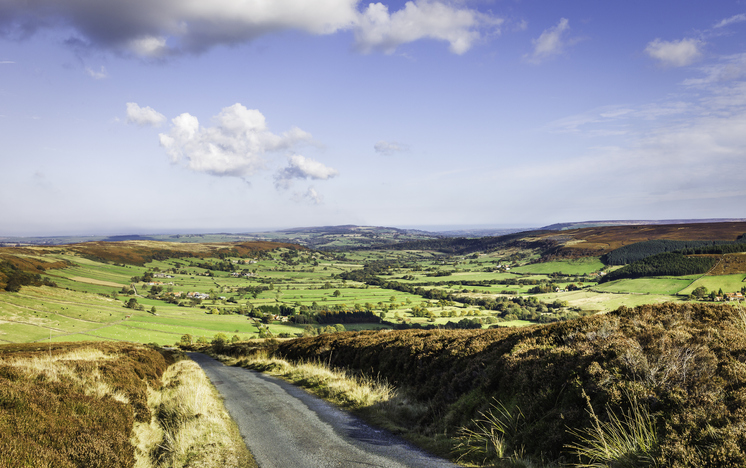
Inland from Whitby, the North York Moors National Park offers a vast stretch of quiet, unspoiled upland scenery, ideal for walking, cycling, or leisurely touring. The landscape shifts from sweeping heather moorland to sheltered valleys, giving visitors a real sense of space and tranquillity.
The village of Goathland, famous as “Aidensfield” in the TV series Heartbeat, is just a short drive away and makes a charming stop during your North Yorkshire break. Nearby Grosmont is equally picturesque and is home to the North York Moors Steam Railway, where vintage steam trains run through the moorland and connect with the Esk Valley Line.
As you explore further, you’ll find rolling moorlands and gentle dales dotted with traditional villages, ancient castles, and atmospheric abbeys. Much of this countryside is strongly associated with James Herriot’s beloved stories, offering a timeless glimpse into rural Yorkshire life.
Frequently Asked Questions about Whitby
Why is Whitby so expensive?
Whitby’s popularity as a year-round tourist destination drives up demand for accommodation, food, and attractions, making it a little more expensive than other areas across North Yorkshire. Seasonal events like Whitby Goth Weekends and summer holidays add additional pressure. As a result, both visitors and locals often experience higher-than-average costs.
Where is Dracula’s Grave in Whitby?
There is no actual “Dracula’s Grave” in Whitby, as Dracula is a fictional character created by Bram Stoker. Many visitors confuse a memorial bench in St Mary’s Churchyard with a grave from the story. The churchyard does feature heavily in the novel, which adds to the myth. However, there is no real burial site connected to Dracula.
How much time do you need in Whitby?
2 to 3 days is the perfect amount of time to spend in Whitby, as it allows you to explore at a leisurely pace. However, there isn’t a definitive answer. You can spend as much or as little time as you want to explore the city’s many attractions, including museums, the famous Abbey ruins, independent shops, and restaurants.
What’s nicer, Whitby or Robin Hood’s Bay?
Whitby offers more things to do, with historic attractions, museums, shops, and a bustling harbour front. Robin Hood’s Bay, on the other hand, is quieter and incredibly scenic, with steep cobbled streets and a dramatic coastline perfect for walkers. Whitby suits visitors looking for variety and activity, while Robin Hood’s Bay is better for those seeking peace and charm. Both are equally nice; however, it depends on the pace you prefer.
The combination of the North Yorkshire Moors and its association with Dracula and Captain Cook has made Whitby an ideal location for holidaymakers of all ages. Book a holiday cottage in Whitby today to discover this coastal gem for yourself.